

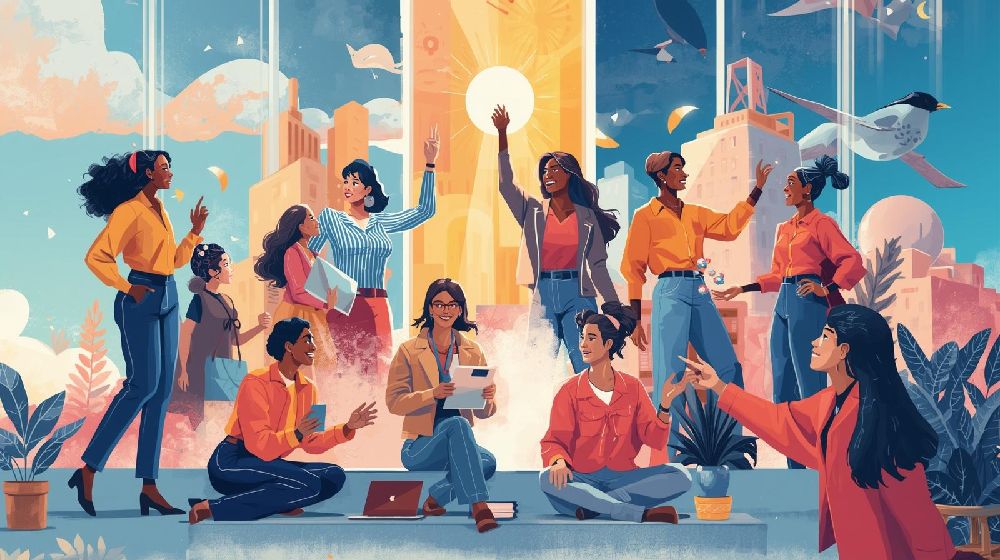
For decades, the global conversation around women’s empowerment has focused on equality—equal rights, equal pay, equal opportunities, and equal representation. While significant progress has been made, equality is no longer the finish line. The next era of women empowerment asks a deeper question: What happens after equality is achieved?
The future of empowerment is not about sameness—it is about equity, influence, and leadership.
From Equality to Equity
Equality ensures everyone receives the same opportunities. Equity, however, recognizes that women start from different positions due to social, economic, and cultural factors. The next phase of empowerment focuses on removing structural barriers and providing tailored support where it is needed most.
This includes:
Access to education and healthcare for all women
Flexible work environments that support caregiving roles
Legal and financial systems that protect women’s autonomy
Equity ensures that empowerment is inclusive, not symbolic.
Women as Decision-Makers, Not Just Participants
True empowerment means women are not just present in systems—they are shaping them. The next era places women at the center of decision-making in:
Politics and governance
Business leadership and entrepreneurship
Technology, science, and innovation
When women lead, policies become more balanced, economies more resilient, and communities more sustainable.
Redefining Success and Power
Traditional definitions of success were often shaped by male-dominated structures. The next phase of empowerment allows women to redefine power on their own terms—balancing ambition with well-being, leadership with empathy, and growth with purpose.
This shift values:
Emotional intelligence alongside technical skills
Collaboration over competition
Purpose-driven leadership
Economic Independence and Financial Literacy
Financial freedom remains a cornerstone of empowerment. Beyond equal pay, the future focuses on:
Women-led businesses and startups
Investment education and wealth creation
Ownership of assets and property
Economic independence gives women the power to make choices without fear or dependence.
The Role of Technology and Media
Digital platforms and social media have amplified women’s voices globally. Technology is now a powerful equalizer, enabling:
Access to education and remote work
Global collaboration and advocacy
Representation and storytelling
Responsible media representation will play a critical role in shaping confident, empowered future generations.
Empowerment as a Shared Responsibility
The next era of women empowerment is not solely a women’s movement—it is a societal transformation. Governments, organizations, families, and individuals all share the responsibility of creating environments where women can thrive without compromise.
Conclusion
Equality was a necessary milestone, but it is not the destination. The next era of women empowerment is about equity, leadership, choice, and influence. It envisions a world where women are not fighting for space but shaping the future—freely, confidently, and unapologetically. True empowerment begins when women no longer ask for permission to lead.